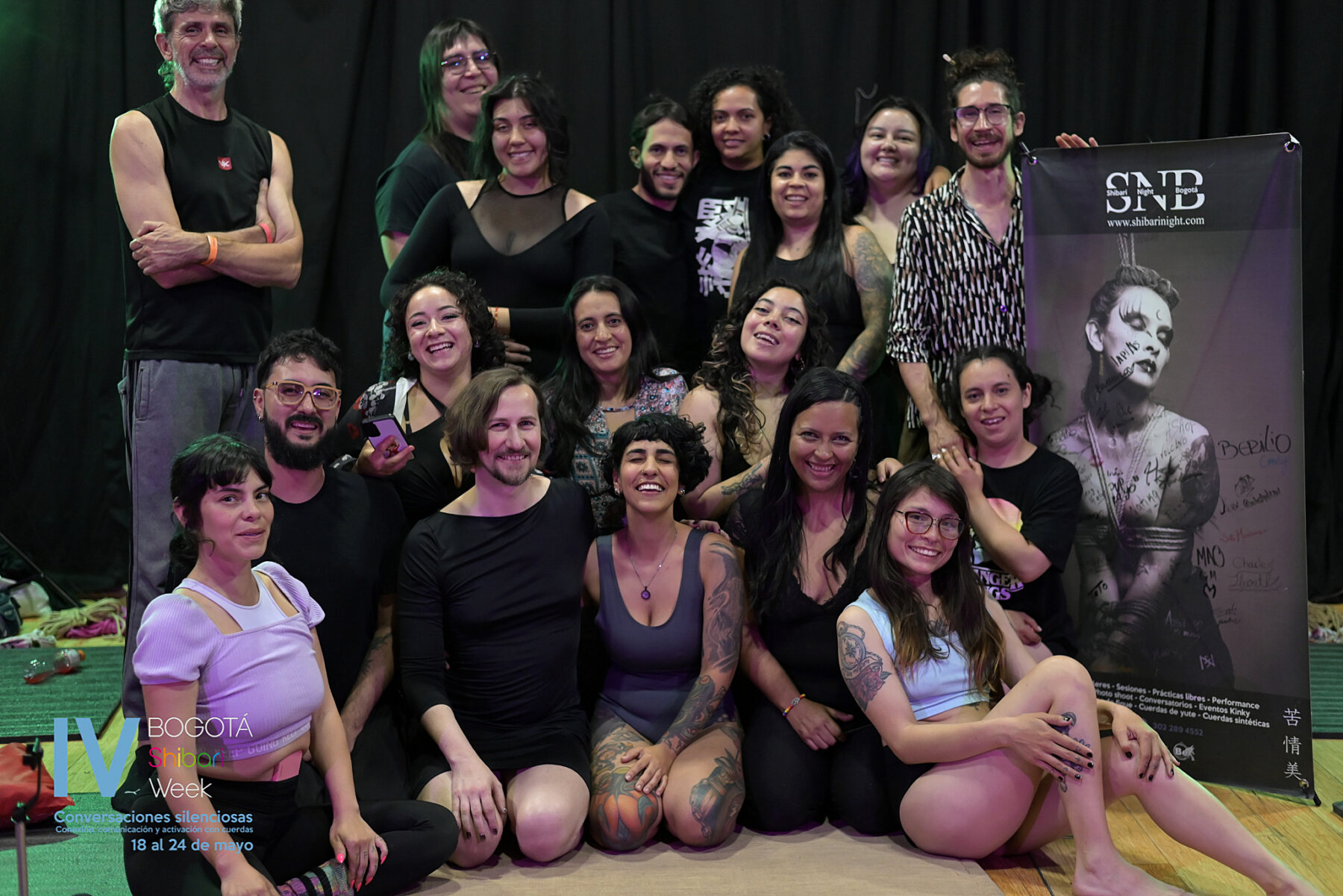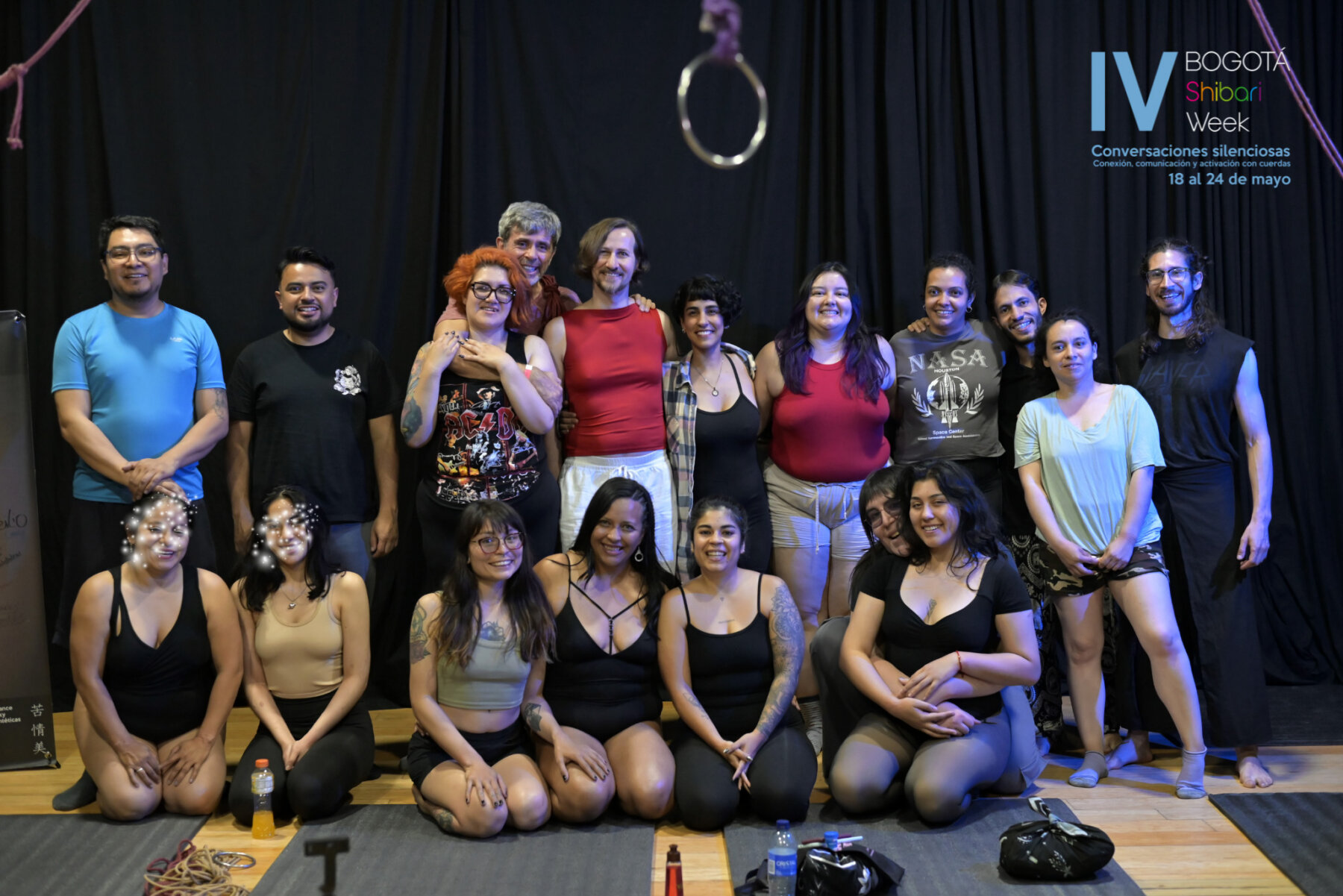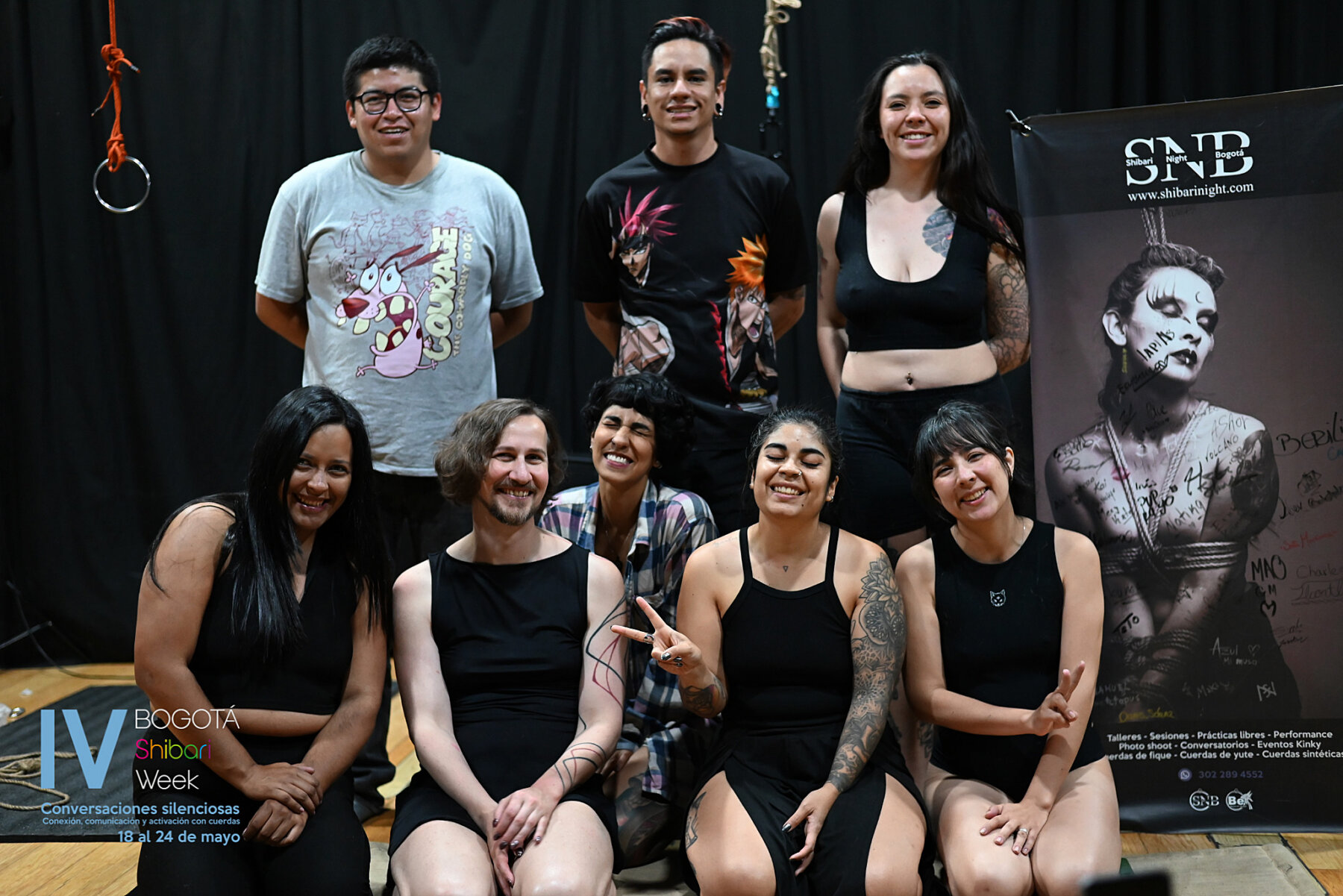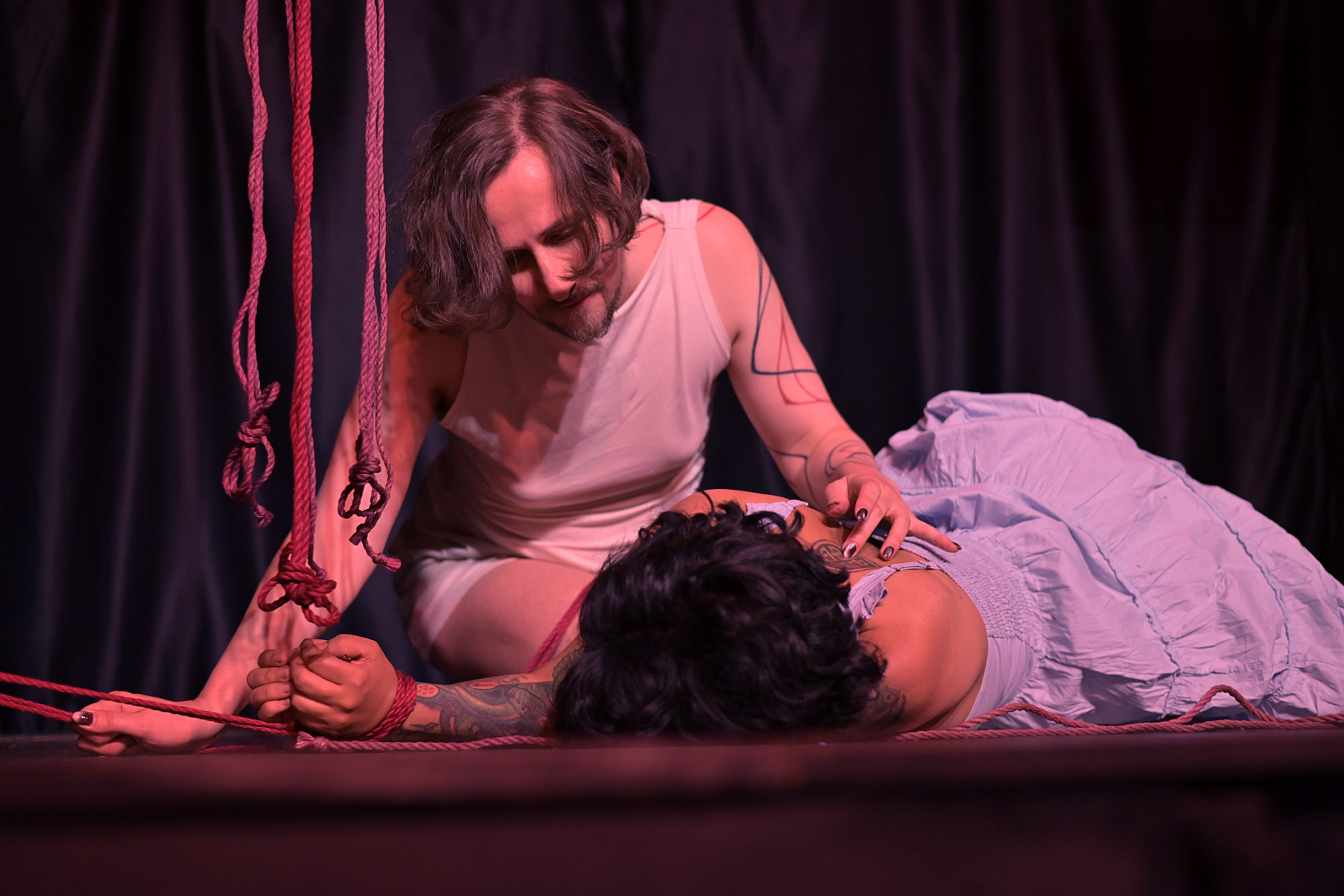
I arrived at El Dorado, the Bogotá Airport at four in the morning. Tired and stressed and wrung out from the flight and the past months. At 1pm it began with a panel talk to introduce the IV Shibari Week Bogotá. Directly after there was the Varieté, a shibari performance night. I was supposed to do the last performance with Liebre Azul, my tying partner from Colombia whom I had never met in person before.
Before our performance we had only half an hour to find out whether we could understand each other. Not in words, but in movement, in rope, in whatever happens between two bodies during a rope performance.
At the end of the fourth Bogotá Shibari Week I was left feeling more affirmed in my rope practice than I have ever felt before. It took me some days and reflections to understand why.
I Arrived With Doubts
After being invited by Shibari Night, I was doubting if I belonged at the front of such a festival. They had invited me as the international special guest, and a quiet voice in my mind kept asking what I could possibly share with these people that they didn’t already know. What I could bring that’s uniquely mine.
The festival’s theme was silent conversations. And the classes I had planned around it were the hardest thing I could imagine teaching. The fine nuances and the invisible layers of tying. The parts you cannot quite grasp technically, the parts steered by feeling more than by form. I had put together classes I had never taught before, on exactly the thing that resists being taught at all. I did not yet know whether any of it would hold up in front of a room — in a cultural context not my own, about a practice that comes from Japan, not from either of us.
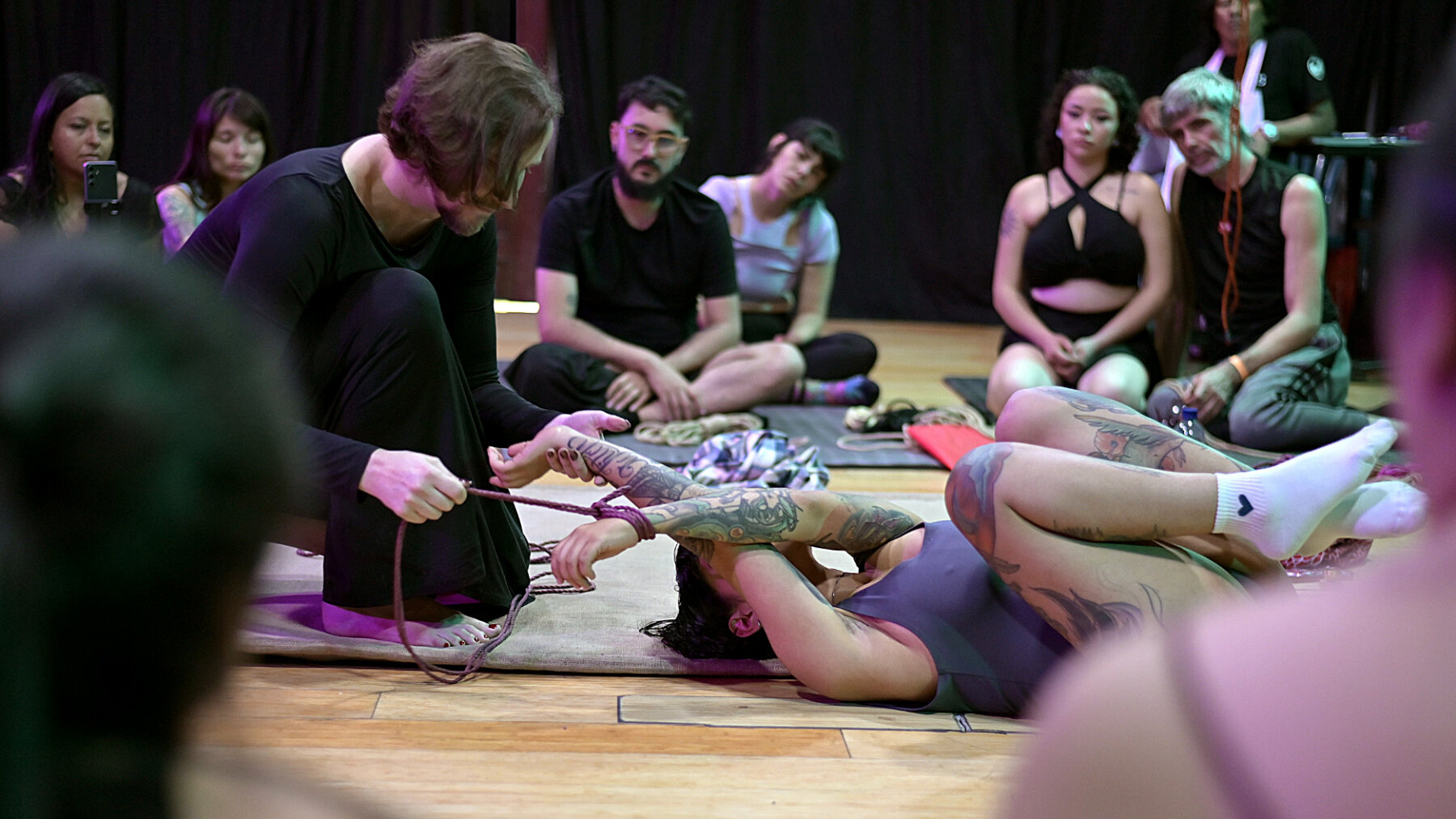
Technique and Feeling
The friction I want to describe is not Colombian, and not European either. It runs through every rope scene I have spent time in. Shibari is an intimate practice that happens (mostly) between two people, and there is a point in many people’s journey where the ego pushes its way into the practice. Where someone wants to prove they are valid, wants to show how good they are, and reaches for technical excellence to do it. Clean lines, correct forms, the purest style, the right vocabulary. And in that reaching, the path of intimacy and often trust gets left behind.
I went to Colombia and recognized my experiences from Europe in some private conversations there. The same two pulls inside the practice. And inside most of us who tie. Almost everyone wants both: the competence and the connection. But people weight them differently, and some lean so far toward technique that rope becomes something to be ranked and earned, while the exchange, the trust, the silent conversation between two bodies slips into the background.
Certificates Don’t Touch Hearts
I do not think the border is drawn out of malice. People pay a lot of money and spend a lot of time to learn this practice, and they want something solid to hold onto. Certification can offer exactly that.
What it quietly assumes is that shibari is a craft whose value lives in correctly executed forms, and that mastery can be ranked, examined, stamped. Learn the patterns, pass the levels, and you are doing it right. Prioritize feeling over form and you are doing something lesser.
I understand the appeal. Technique is teachable and measurable in a way a feeling never is. A solid technique also matters in a practice where so much can go wrong. But I have watched a tool for keeping people physically safe slowly turn into something else: a way of deciding who belongs, the checklist drifting from serving the practice toward policing it.
So my quarrel is not with skill, or with the people who spent years earning it. It is with the moment skill stops being something you learn for the safety of your partner and becomes a badge you have to show at the door.
What gets lost is the part that cannot be certified: presence, the capacity to listen with your hands, the flexibility to get messy, the willingness to not know what comes next.
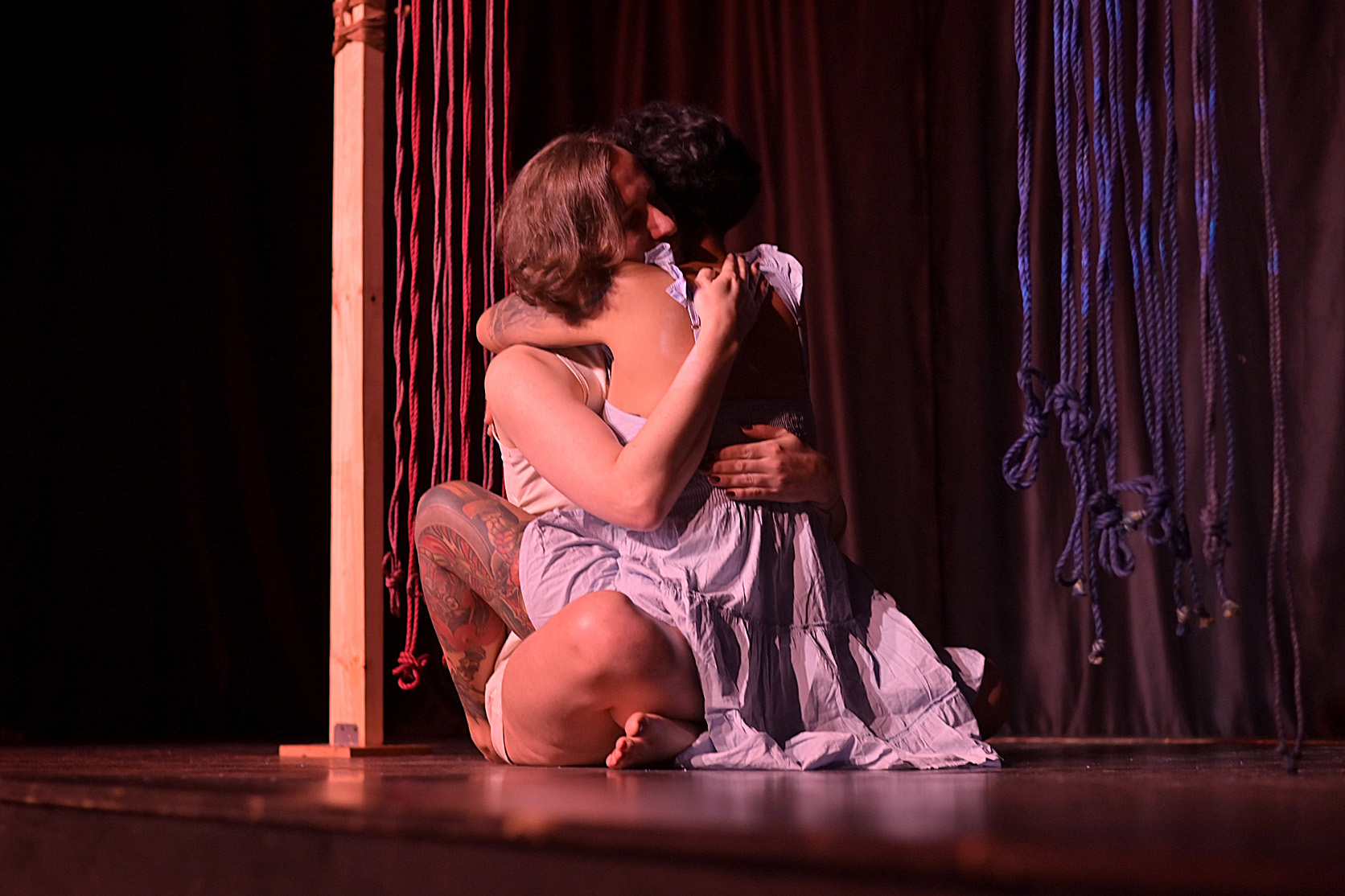
A Silent Conversation
Azul and I had half an hour. We agreed on a rough outline and had only tied a little, to feel whether we could move together. It was enough to feel confident with each other.
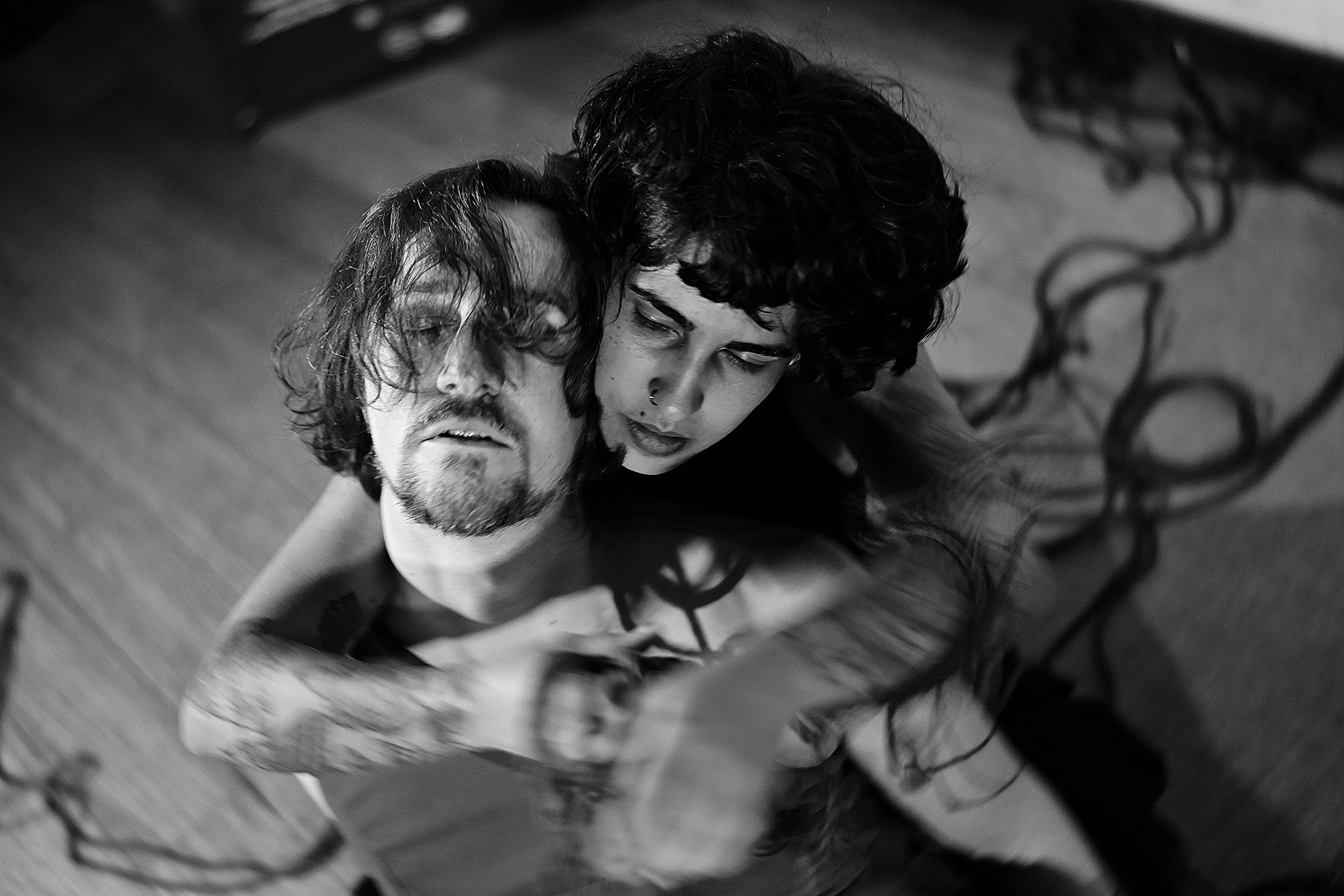
We wanted to open with a statement. Rope performances so often begin the same way. One person seated, the other standing beside them or walking in, the rope present from the first moment. We refused that. Before the curtain opened, we were already on the floor, holding each other in a hug, close like lovers. Calming each other down to get rid of the nervousness.
When the curtain opened, we did not move. We held that position, completely still, for almost three minutes – the length of the short introduction song. As the song ended, we began to move almost in slow motion. It was an intimate moment of exploring each other via movement and touch. Six, maybe seven minutes had passed before we introduced the first rope.
By then the room was already captivated.
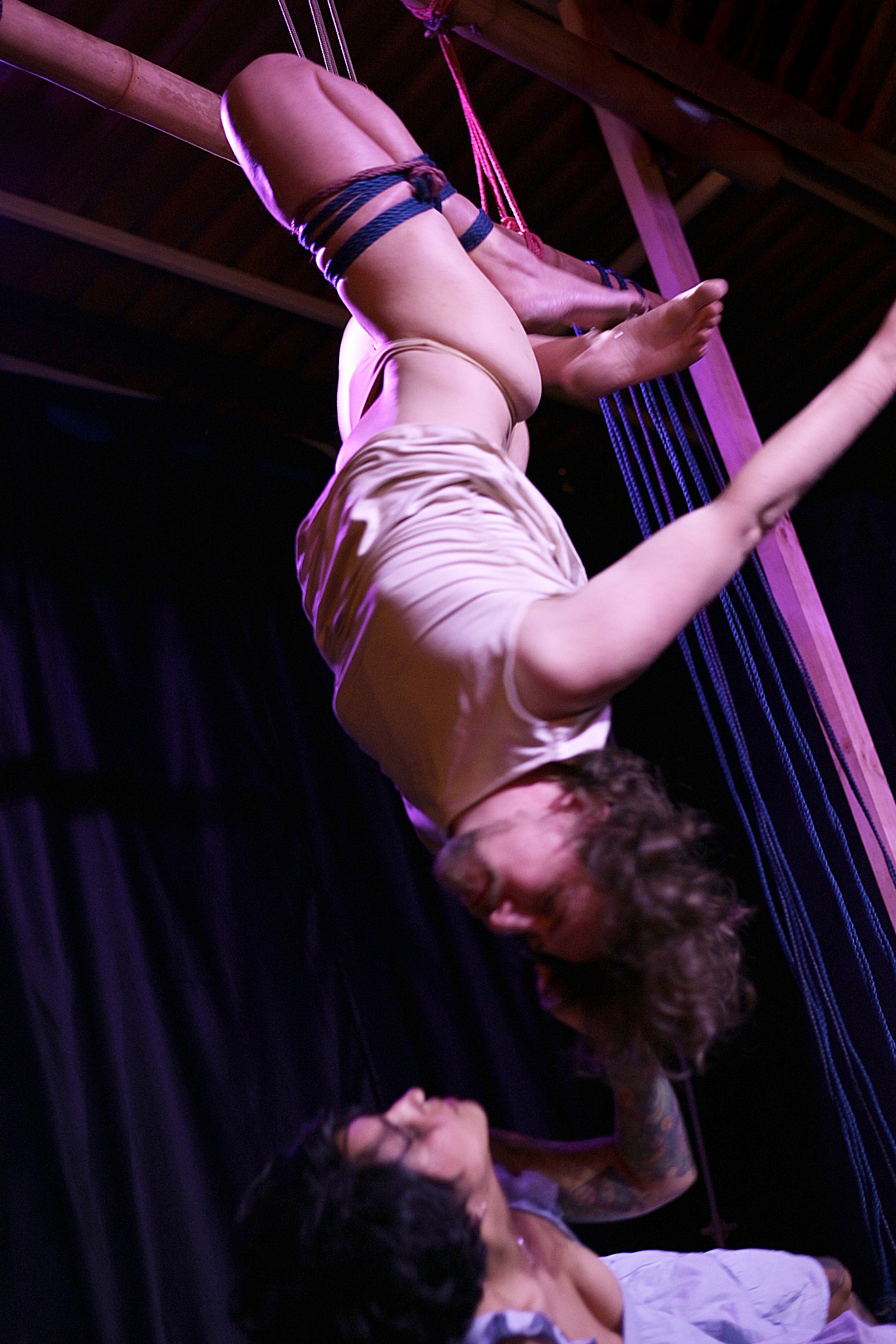
And the performance ended as it had begun: Inverted. Me alone, upside down, hanging from a single futomomo, pulled slowly upward with a pulley system to an instrumental of Space Oddity.
People asked us afterwards how we had managed to rehearse the whole performance in such a short time. We mostly hadn’t. The beginning and the end were planned: the still embrace, the inversion to close. Everything in between had been improvised. No choreography to memorize, no forms to reach for. We simply listened to each other and went with the flow.
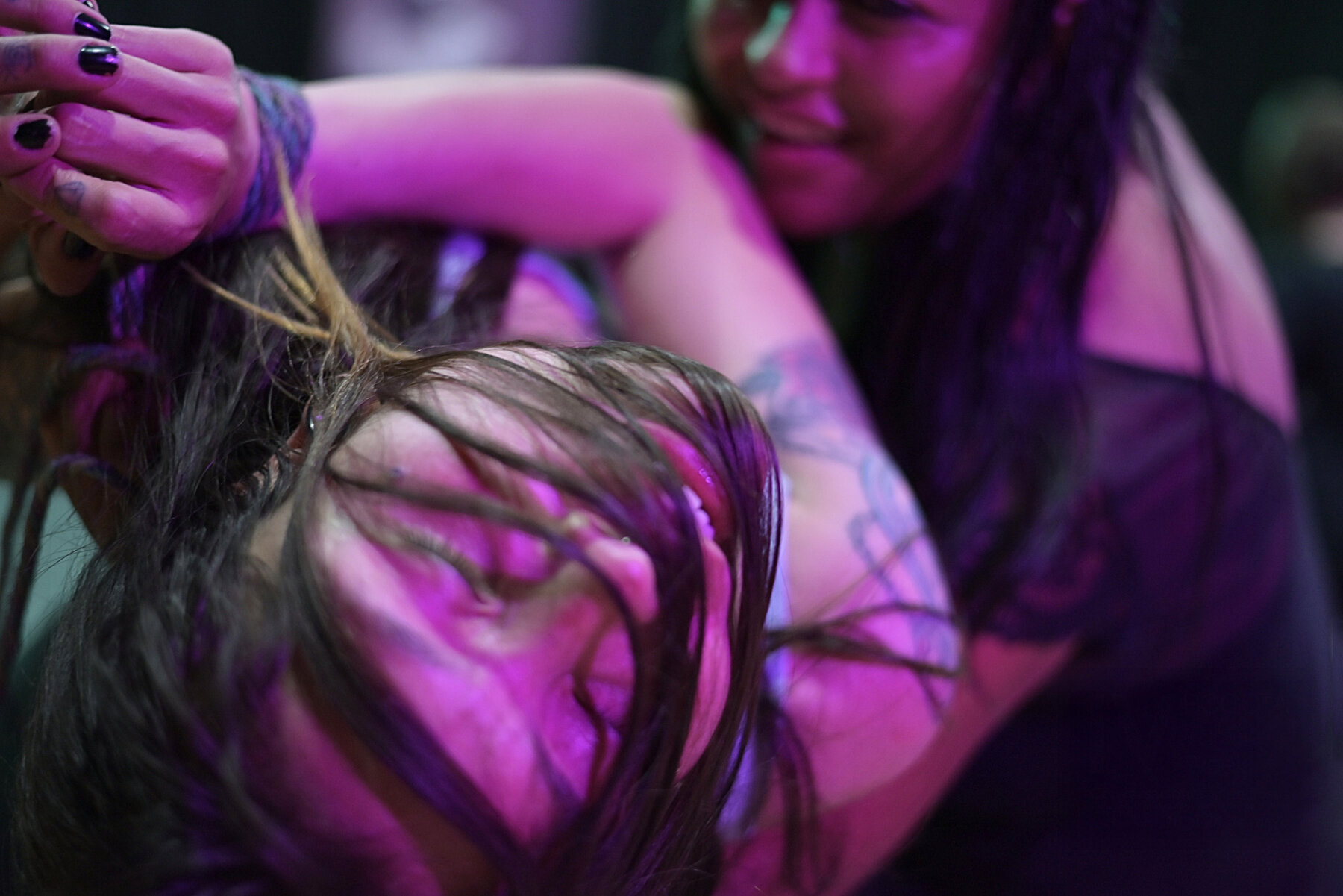
A Confirmation From Outside
Through the week I taught four workshops, participated in a photoshoot event, and created a collaborative photo work with the community. People told me that it is rare in Colombia to find rope teachings about the emotional and interpersonal aspects of tying.
In conversations I had the sense of a community that wants exactly this, and that does not always find it easy to claim space for it. I cannot make any claims here, because I only heard it in personal conversations — but the shape felt unmistakable to me. It is the same shape I know from running Karada House.
You build something around the relational side of the practice, and somewhere there is always pressure suggesting that this is not quite the real thing, not quite rigorous enough.
Without intending to, I could offer something that felt to some like a confirmation from outside: the human, relational side is legitimate. You do not have to justify it to anyone. Your heart matters.
The Morning Messages
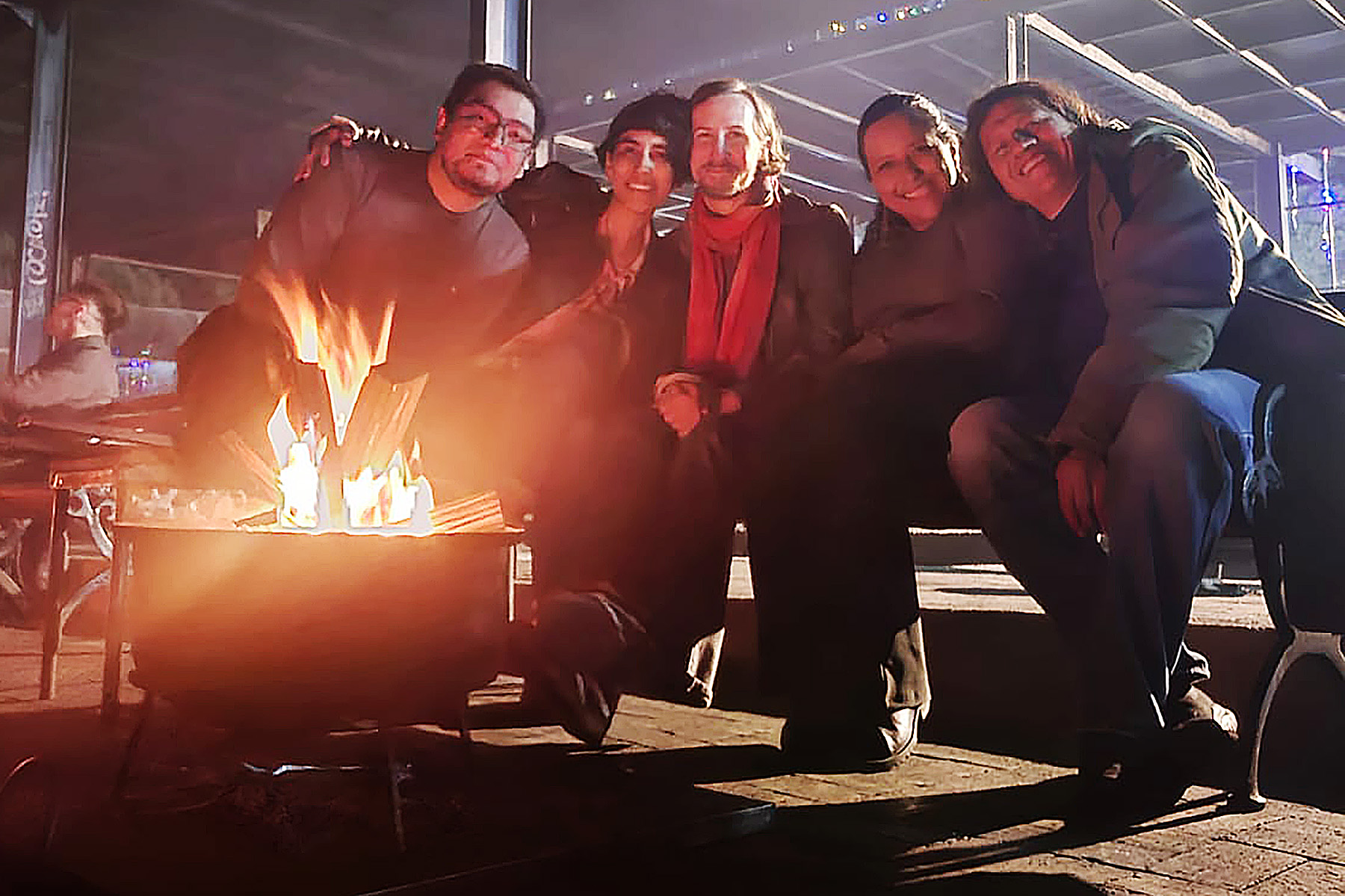
The best way I can describe the warmth of that week is to tell you what happened every morning. I woke up to messages from the organizers. They were mostly not about logistics. These were messages about how the days were going, how their hearts felt. They shared positive feedback from the workshop participants with me. They constantly checked in with me to see how I was doing, asking about my needs. Inquired about my needs. And one message ended simply: “Thank you for giving us part of you.”
That kind of care was far from what I had expected.
I watched the community the same way. The constant checking-in, the way people looked after each other. It was easeful in a way that surprised me, leaving my queer Karada House bubble. Seeing this filled me with some hope.
And on the last day, a fellow queer person came to me in tears, to tell me what those days had given them. By the end, a whole group sat together crying, touched by each other. Very beautiful.
The Open Heart
People are reached when you open your heart, not when you win the argument about what real shibari is. When you share your own way, from passion, instead of reaching for a standard to enforce. Sharing what is yours, giving others space to make it their own, and to disregard what doesn’t make sense to them.
I came to Bogotá with doubts. I left with answers to questions I had not asked. It showed me that you find a place in people’s hearts when you show up with what moves you, and when you leave your ego behind. Open to listen, instead of pretending to have the answers for everything. When I left, I felt that a part of my heart stayed there.
Muchas gracias, Bogotá, sumercé.