
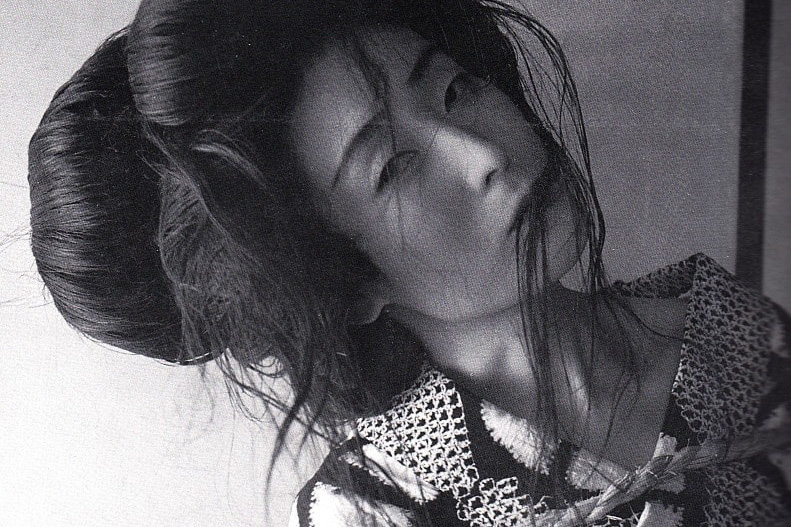
Who Was Kise Sahara?
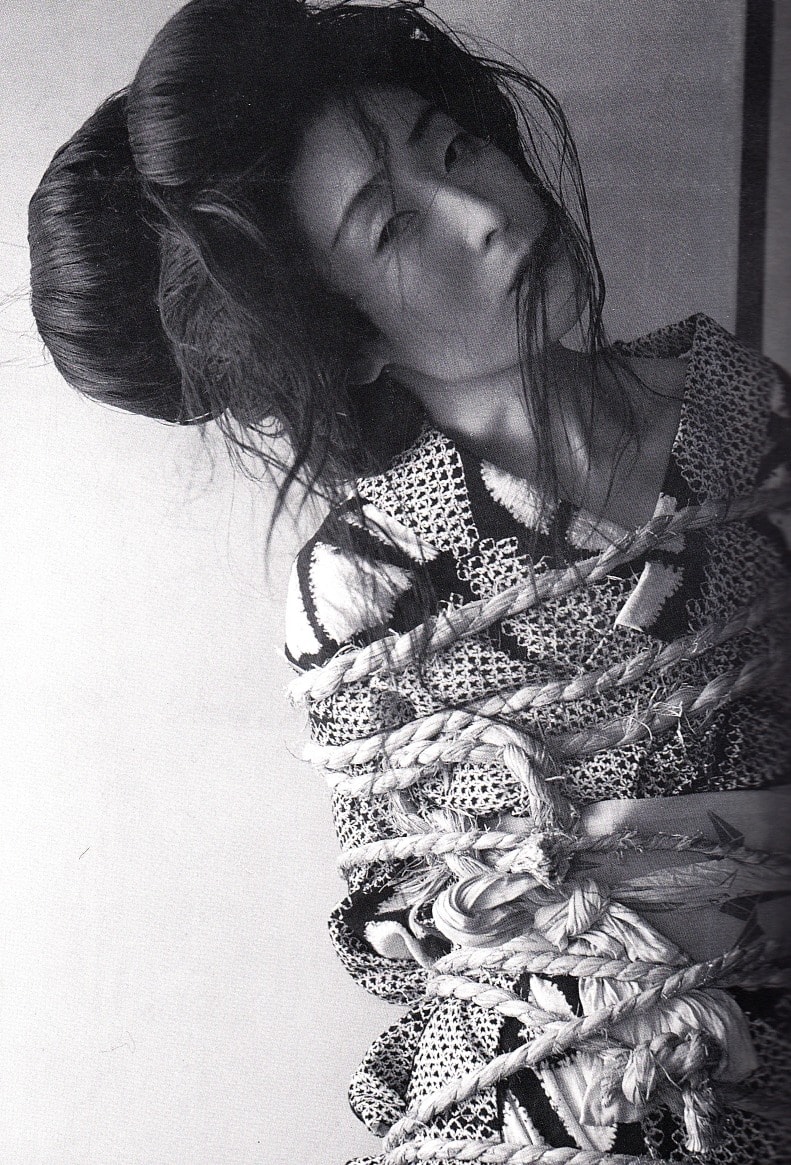
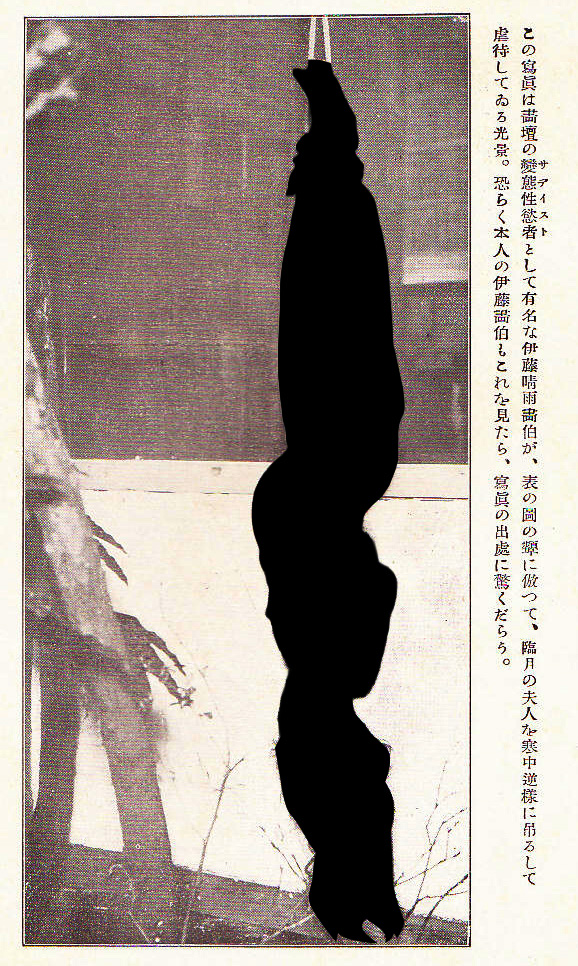
There is a photograph. It is one of the most well-known images in the young history of Kinbaku. A woman, heavily pregnant, being suspended with rope upside down, bound. It was taken in 1921. It is cited, reproduced, and treated as a founding document of an entire practice to this day.
The woman in the photograph is named Kise Sahara.
And that is almost everything we know.
It connects to something I’ve been thinking about for a while. About what gets remembered in this practice, and what disappears. I wrote about it from a different angle in Empty Rope.
What the sources say
Kise Sahara was born sometime between 1893 and 1895. The exact date is unknown. She worked as an actress at the Kaiseiza theater in Tokyo and supplemented her income as a day model, earning 80 sen per day. In 1919, she was introduced to Seiu Ito as a model. That same year they became a couple, she became pregnant, and they married.
In the years that followed, she modeled for snow torture photography, for suspensions, for series that Ito published in magazines and private collections. In June 1921, in her ninth month of pregnancy, she was suspended upside down and photographed. The image is titled Rinketsu Bijin Sakasa Tsuri no Shashin:
“Photograph of a Wife in Inverted Suspension in Her Last Month of Pregnancy.”
In 1925, she joined a theater troupe and traveled with them to Hokkaido. Ito and she divorced. The Japanese SMpedia source notes this dryly in a footnote: “Later, he cheats on her and leaves her.”
In 1926 – one year after the divorce – the pregnancy suspension photograph appeared without Ito’s permission in the December issue of the magazine Hentai Shiryou. The photograph was published alongside a ukiyo-e print by Tsukioka Yoshitoshi, which Ito had cited as the visual inspiration for his work with Kise Sahara.
After that: nothing. No date of death. No further entry.
Not a single word of her own.
The only source that gives her a page of her own – Nawapedia – relies as its primary source on Seiu Ito’s own article “Various Types of Suspension Torment” (Fuzoku Soshi, January 1954). [Nawapedia: Kise Sahara, source note] We know who Kise Sahara was because her ex-husband wrote about her in an SM magazine thirty years later.
The question of willingness
Wikipedia describes Kise Sahara as having “posed willingly for her husband.” Another source says she “voluntarily posed for Ito.” The framing recurs across descriptions of their collaboration. Consent rendered as settled fact, stated without a source.
The word carries a great deal. It closes a question before it can be asked.
What does willingness mean for a woman who earned 80 sen a day as a day model. In a society in which women had almost no economic independence? What does it mean for a woman who was pregnant by her husband, in a marriage in a higly patriarchal society? What does willingness mean when the alternative – refusal, resistance, her own terms – is not documented, because nobody thought to ask?
I am not raising these questions to claim that Kise Sahara was coerced. I don’t know that. Nobody knows.
No source contains her own account. That is precisely the problem. And it is not only a question about 1921. In the last fifteen years, the international shibari scene has engaged in various serious debates about abuse of power, consent, and the asymmetries between riggers and their tying partners. The account of the person being tied is invoked, in these debates, as central. Non-negotiable. In practice, the record looks different: when someone comes forward, they are often not believed, or ignored, or when the case becomes too visible to dismiss, the rigger takes a two-year pause and returns as though nothing happened. The structure remains intact.
And yet the earliest document of this practice that continues to be reproduced today is one in which we do not have the account of the person being tied. We never asked.
The child
Kise Sahara was photographed in her ninth month of pregnancy. She was heavily pregnant. The child is not mentioned in a single available source. No source says whether the child was born alive. Whether it survived or who raised it. Kise Sahara, who separated from Ito in 1925, or Ito himself, who is recorded in the SMpedia source as the father of at least two children from his first marriage.
According to the Japanese SMpedia source, Ito’s children from his first marriage are recorded by name: a son, Masaaki, and a daughter, Kiku. The child or children from his marriage to Kise Sahara: no name, no mention, no date. A child who, like its mother, does not appear in the record.
Whose story?
The 1921 photograph was published without Kise Sahara’s consent – and without Seiu Ito’s consent. For Ito, the photograph became part of his public identity as an artist and “father of modern kinbaku.” For Kise Sahara, it was an image of her pregnant body that entered public circulation without her knowledge, at a point when she was no longer even his wife.
The sources agree: the image was attributed to Seiu Ito, and he was subsequently labeled hentai. A pervert. Whether and how that label fell on Kise Sahara herself – whose body the image showed – is not documented in any source. The question appears never to have been asked.
Everything we know about Kise Sahara comes from sources written about her, not by her. Her perspective on working with Ito, on the suspensions, on the publication of the photograph, on the divorce: not documented. No letter, no interview, no diary entry. Not even a date of death.
The most well-known image in the early history of kinbaku shows her body, and her name does not appear in any of the established historical maps of shibari’s development and lineages.
Who gets to be remembered
This is a question about structures. About how knowledge is produced, who produces it, and whose experiences are deemed historically relevant. Seiu Ito wrote about his own work. He wrote about his models. He wrote about Kise Sahara. As material, as muse, as part of his artistic development. Those texts were archived, cited, transferred into wikis.
Kise Sahara did not write. Or if she did, no one kept those texts.
The result is a historiography in which one person becomes subject and another becomes object. One person has a biography. The other has a chronology of photo sessions. Logically I can not give any answers. But it ventures to ask questions I have not found asked anywhere else.
Sources
All factual claims in this essay are drawn from the sources listed below.
- Nawapedia: Kise Sahara
- Nawapedia: Seiu Ito
- SMpedia: Seiu Ito
- Wikipedia: Seiu Ito
- Kinbaku Today: “Kise Sahara: The First SM Model in Japan?”
- Pen Magazine Online
Japanese-language primary literature (biographies, magazine articles, newspaper coverage from the 1920s) was not directly accessible to me. All Japanese-language sources were read through machine translation.

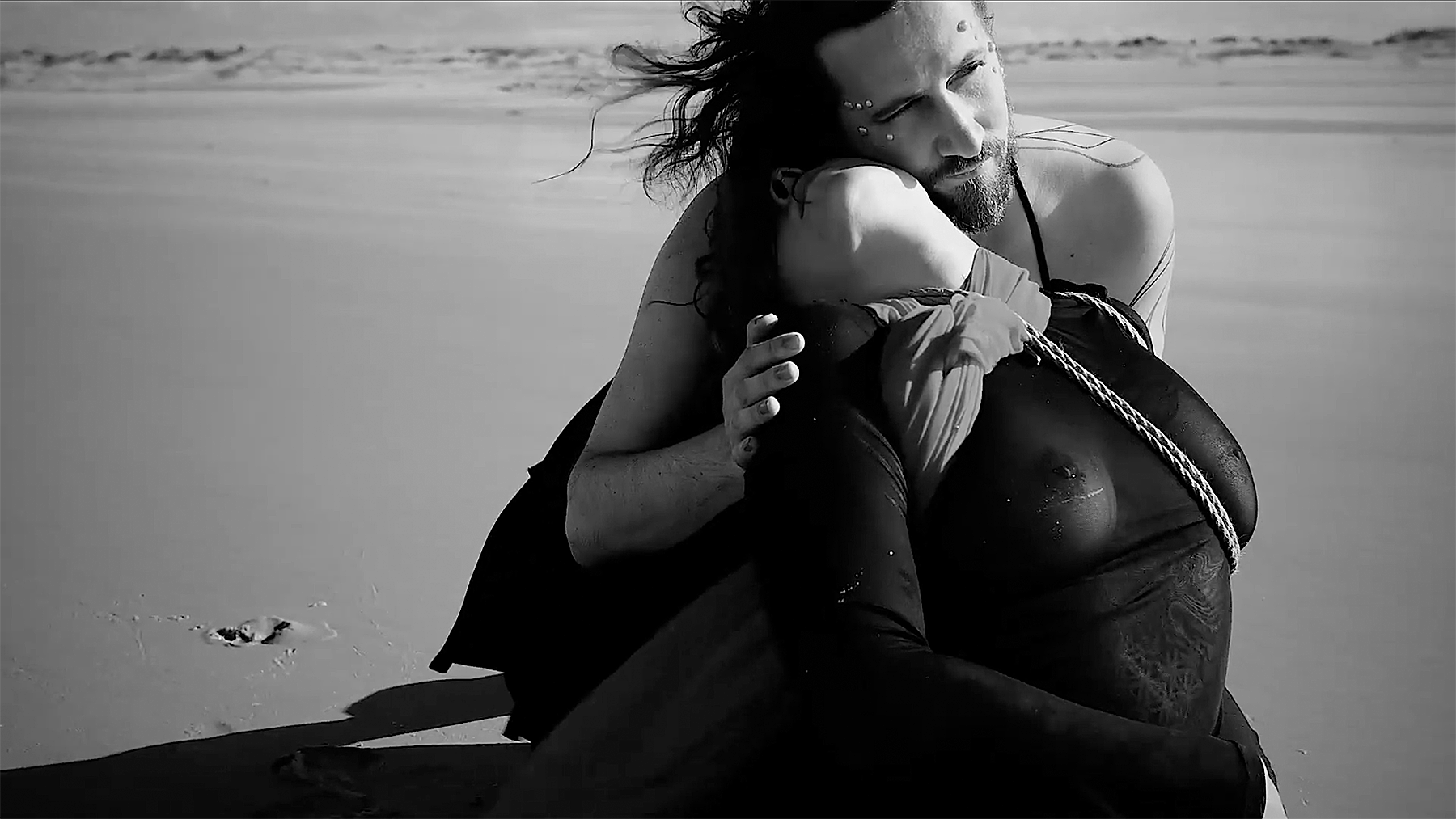
Conversaciones Silenciosas
When Bogotá Shibari Week first reached out, they asked me what the festival theme could be. If it were inspired by my work. I made a suggestion. They came back with Conversaciones Silenciosas. Silent Conversations.
It was better than what I had proposed. It named something I’d been circling for a long time.
What do bodies say when words lose their meaning? What conversations happen between tension and release, between tying and being tied? I’ve been asking this for years. In rope, in photography, in film. And now a whole week in Bogotá runs under that exact question.
That made me thoughtful, and got me looking at my own work with different eyes. What am I actually doing here? What do I want to say? What conversations am I trying to have?
And then the other direction: what happens when I bring these questions to Bogotá? To Colombia. To a community I’m still getting to know and curious about. It goes both ways — what I bring, and what I take back. What I learn. Where this practice leads me next.
Where I’ll Be
Varieté: Between Pink & Blue · May 18
A performance collaboration with Azul Ropes on opening night. The title says something about where bodies are allowed to exist — between the colors we’re assigned, in the space that’s supposedly empty.
Opening Conversatorio · May 18
¿Cuerpos que conversan sin palabras? — A panel discussion to open the week.
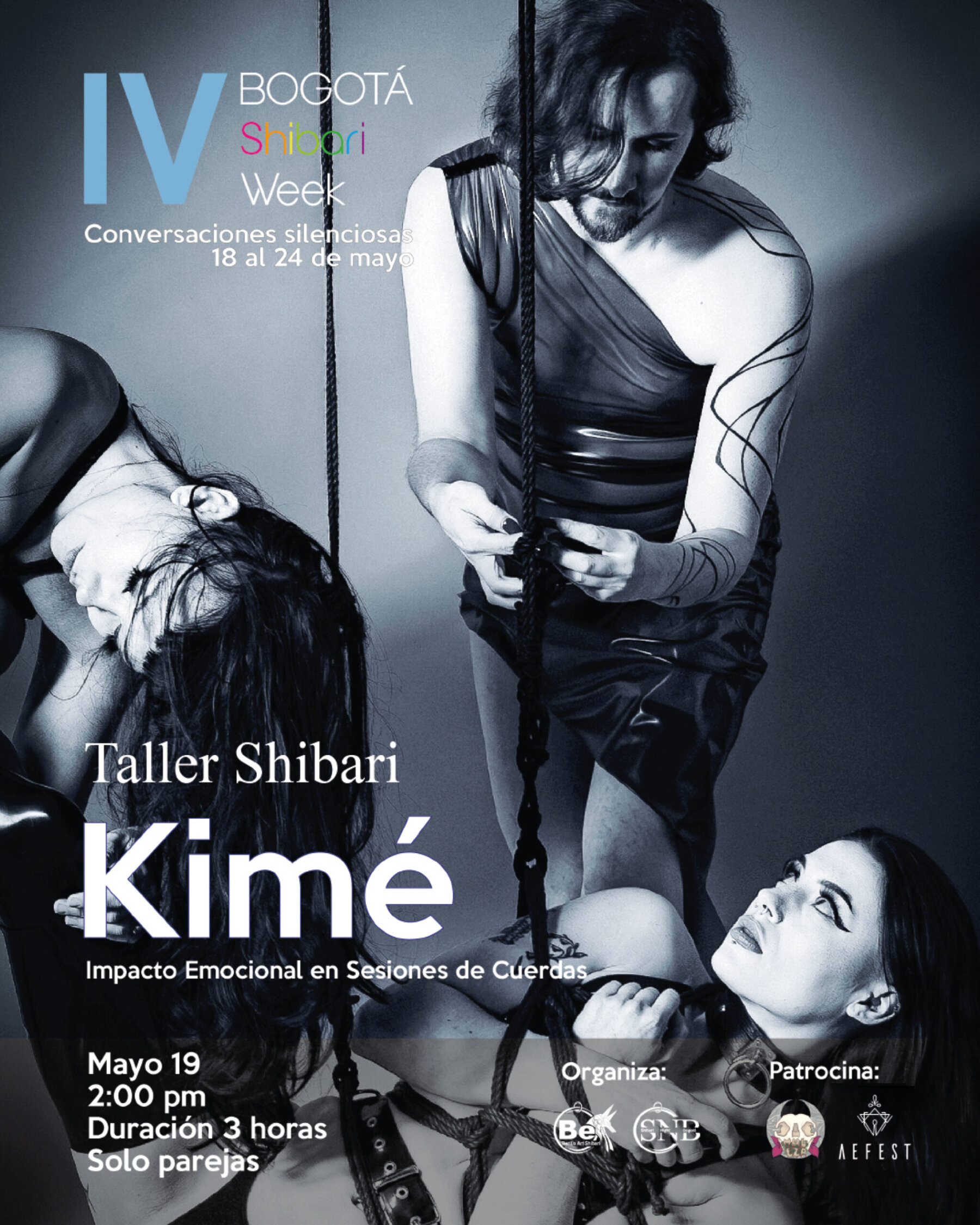
Workshop: Kimé · May 19
Emotional impact in rope sessions. Moments of peak intensity in a session: not necessarily the most extreme physical moment, but the one where something shifts. How do we recognize it? How do we hold it? How do we come back from it?
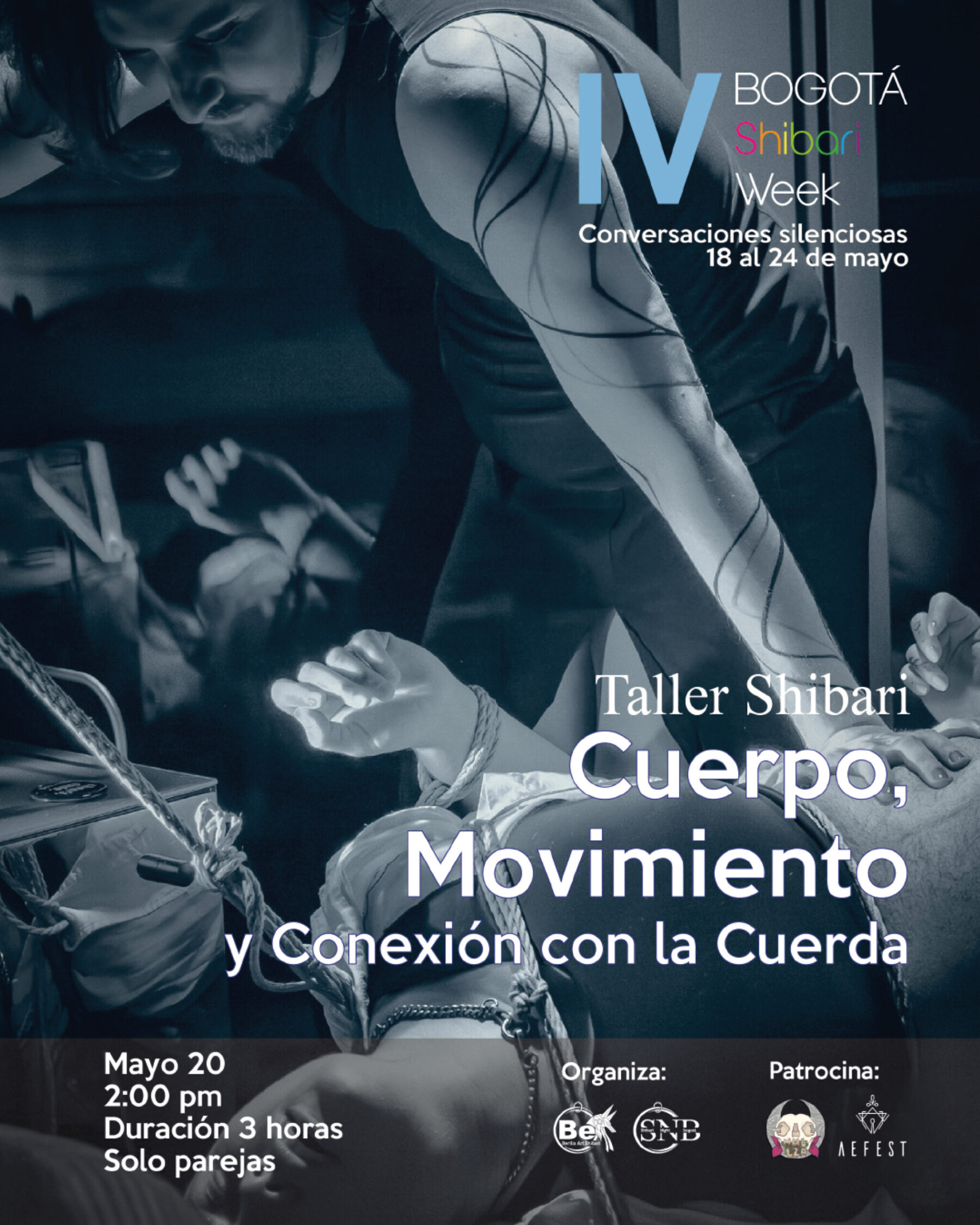
Workshop: Body, Movement & Rope Connection · May 20
Rope as a sensory and relational system. What does it mean to let the rope moves with a body rather than simply constrain it?
Workshop: Edge & Play · May 20
Erotic exploration through rope — for couples.
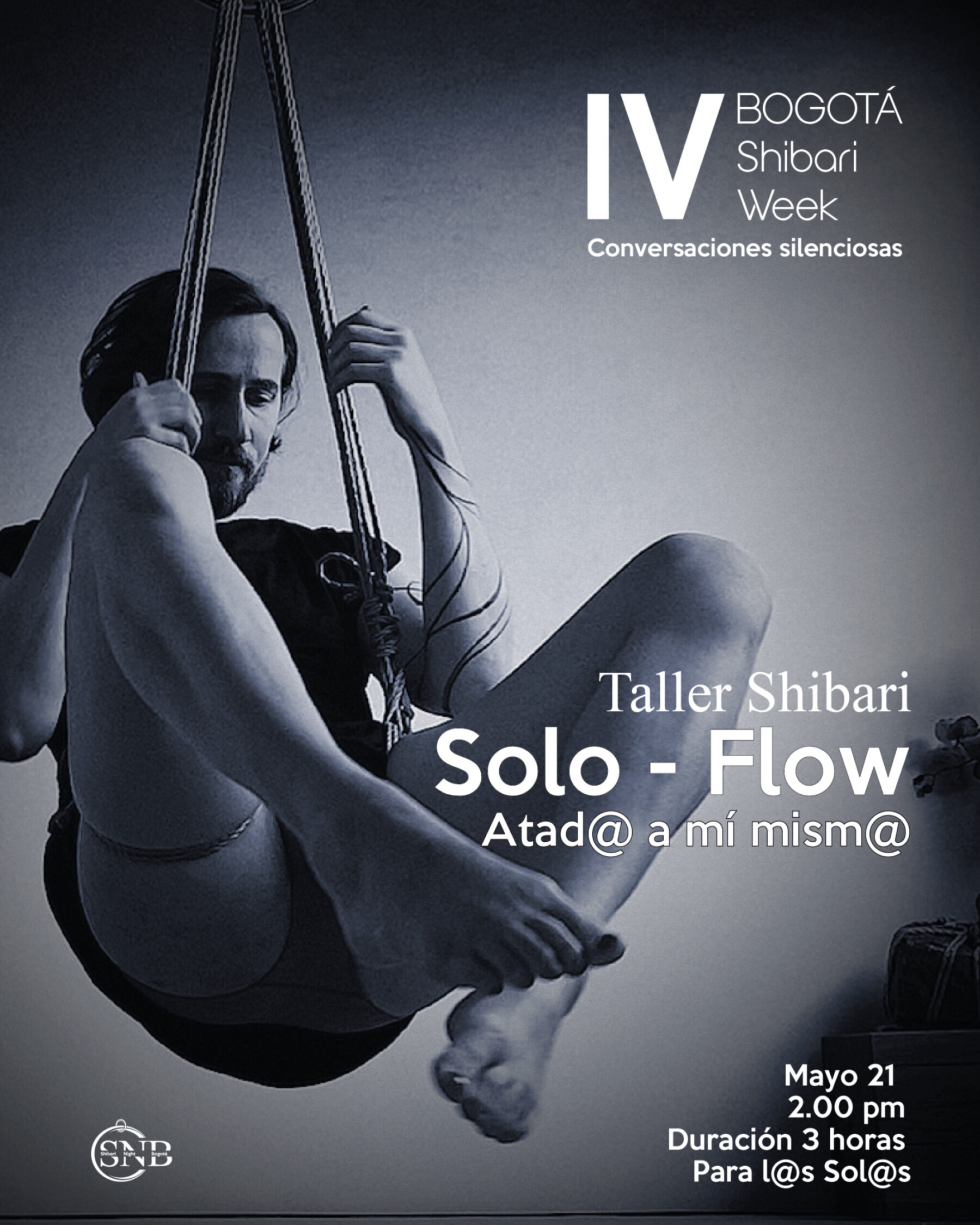
Workshop: Solo-Flow · May 21
Atad@ a mí mism@. Tied to oneself. For participants who come alone — a space for practicing rope as a relationship with your own body, without a partner as intermediary.
Shibari for Photography · May 21
Both sides of the rope. Both sides of the lens.
Rope Triptych — Collaborative Art · May 22
Three perspectives, one visual structure. A collaborative art session that takes rope out of the session context and into something explicitly compositional. Artistically inspired by the cover art work of ’Ritual de lo Habitual‘ from Jane’s Addiction.

Empty Rope: When the Body Leaves, What Remains?
In 2021, I began creating something I had never seen before: rope sculptures without bodies. Shibari patterns frozen in space, holding only air and memory. I was thrilled with what emerged — these sculptural forms felt entirely new to me, a way of seeing rope I hadn’t encountered in my years of practice. Only in 2025, shortly after sharing the first images publicly, did someone point out that a Belgian artist named Shadow had explored remarkably similar ideas back in 2011. Two artists, separated by time and geography, arriving at the same visual language independently. This moment of humility became the starting point for a deeper question:
What does it mean to create in a practice where ideas flow like water — where lineage matters deeply, but ownership feels impossible?

The Paradox of Ownership in Shibari
In the international rope scene, debates have long raged over who can “own” ideas, techniques, styles, or images. Some ties are so distinctive they can be immediately attributed to a specific person, school, or style — sometimes even bearing that person’s name. But here’s the fundamental question:
Can rope as an art form even be owned at all?
Could a harness ever be patented?
My earliest rope sculptures — the ones shown here — are a perfect example of this tension. Anyone deeply immersed in the craft can instantly recognize the stylistic origins of each piece. They carry visible lineage, echoes of teachers and traditions that shaped my hands. I learned these forms through transmission — through watching, being tied, tying others, attending workshops, studying with teachers who themselves learned from teachers. The knowledge lives in my hands because it passed through other hands first. So when I create a sculpture based on these forms, what am I creating? Something entirely new? Or something that carries the weight of everyone who came before?

The Body as Essential Element
If we take the idea of “intellectual property” in rope seriously and strip it to its core, what becomes of the work when the body is removed? Does rope, in the absence of a body, automatically become art? Or is what remains merely the residue of an act that once unfolded upon skin, breath, sensation? And if the imprint remains on the body instead — in marks, in sensation, in memory — is the rope work incomplete without it?
Traces That Cannot Be Patented
Those who have been tied in an intense session rarely seek to recreate it for the sake of wearing a “fashionable” art form on their skin. What they return to are the traces — visible and invisible — left by the rope. These traces anchor memory. They offer clues to an experience that cannot be fully captured in words, and certainly cannot be patented. The rope leaves its mark. The body holds the memory. Neither can be owned.
When I create these sculptures, I’m freezing a moment that is usually ephemeral. The body is absent, but its shell remains — in the curve of the rope, in the tension held by the knots, in the negative space that suggests weight and breath.
From Legacy to Commodification
In art and rope practice, there is often a desire to honor legacy — to acknowledge where knowledge comes from, to recognize teachers, influences, and the countless hands that shaped a form. Yet in a capitalist framework, these same impulses are often distorted. The wish to honor and preserve can become a drive for ownership: intellectual property, trademarks, certifications. Labor and craft are assigned purely monetary value, and ideas are enclosed and protected as if they were commodities. What begins as recognition of influence can turn into claims of possession.
And in this process, many voices vanish. The subtle contributions of countless makers — teachers, peers, uncredited hands — are flattened, anonymized, or forgotten. Only a few “recognized” names remain — the trademarks, if you will — attached to works that are inherently collaborative.
Living in the Tension
It is precisely in this field of tension — between legacy and commodification, acknowledgment and ownership — that we operate. Fairness and justice in art cannot be reduced to legal claims or certifications. They live instead in dialogue, transparency, and co-creation. This is why I credit the lineages of my rope sculptures explicitly (to the best of my knowledge). Not because I’m required to, but because it matters. These forms didn’t spring fully formed from my imagination — they carry the DNA of specific teaching lineages, specific approaches to the body, specific philosophies of rope. To name that lineage is not to diminish my work. It’s to place it in context, in conversation, in community.
Ideas as Currents in a Shared Sea
When I discovered Shadow’s “Invisible Bunnies” from 2011, I recognized. Here was someone else asking the same questions I was asking: What is rope without the body? Can these forms stand alone? What do they communicate in their absence? Ideas emerge in different places, often at the same time, often independently of one another. Two artists, separated by time and space, can still arrive at a similar visual language — and therein lies the beauty.
Perhaps the most beautiful thing about art is not to own something, but to be part of a story that is bigger than ourselves. Ideas are not private islands. They are currents in a shared sea. When we create, we’re not pulling ideas from a void — we’re responding to what’s around us, what we’ve learned, what we’ve felt, what others before us have already begun to articulate.

Empty Rope — The Work Itself
Empty Rope is a series of rope sculptures and photographs exploring what remains when the body is removed from shibari.
- The sculptural potential of rope as a standalone form
- The memory and tension held within knots
- The absence of the body as presence
- The question of whether rope can be “complete” without skin
- Lineage, transmission, and intellectual property in rope arts
The sculptures are based on traditional shibari forms — Takate Kote & Gote (hands-behind-back tied) and others — executed precisely as I learned them, but photographed, filmed, and presented as sculptural objects rather than live rope work.
When you’ve felt the rope on your own body, you understand it differently. You know what it holds even when empty. The rope holds memory. The viewer brings the body.
On Lineage and Attribution
The attributions reflect the teaching lineages through which I learned these forms. They are not claims of direct study with these specific artists, but acknowledgments of the stylistic and technical approaches that shaped my practice. In rope, we learn through chains of transmission. I have learned from teachers who learned from teachers. The knowledge in my hands has traveled through many hands before mine. To credit lineage is to honor that transmission. It’s to say: this didn’t start with me, and it won’t end with me.